Educational Consultant/IGCSE/ IELTS/TEFL/Online Learning/Debate /Creative Writing/Digital Marketing/Video Editing/Coding and Robotics
IGCSE Poem: At the Bus Station: Dinzei Maureen
Get link
Facebook
X
Pinterest
Email
Other Apps
-
At the Bus Station By Julius Chingono (a Zimbabwean poet)
When you arrive
at the bus station
pull down your tie
or remove the tie to prevent strangulation. During the fight to board the bus, unfasten all buttons of the shirt and jacket to avoid losing the buttons. During the battle to gain entry to the bus, tighten both shoelaces for, when you are hauled into the bus, you hang in the air and the shoes may come off, tighten your belt to avoid being undressed during the scrambling at the door, remove your spectacles and hold tight to someone until you are in the bus. During the climb pay no attention to human sounds, also bear in mind words lose meaning until you are inside the bus. Summary and Analysis of the Poem
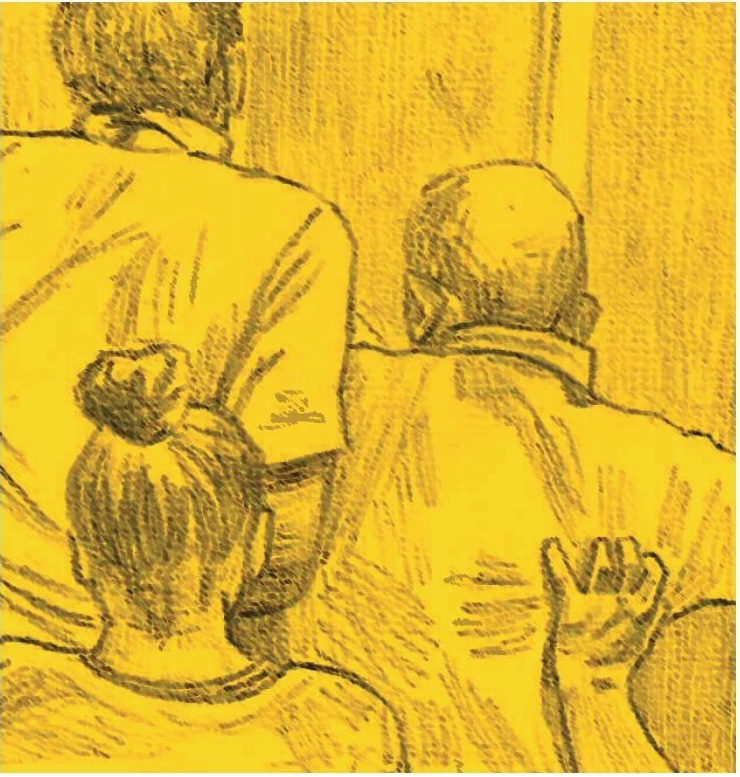
Chingono’s At the Bus Station. Written in one long narrow column, the poem visually resembles a queue of people squeezing themselves as tightly as possible into a narrow space. Chingono uses enjambment so that, instead of laying sentences out line by line in an organised way, they scramble down the page for several lines before a full stop gives a pause for breath. Some lines are as short as three words, and the visual impact is of cramming words into as small a space as possible. Just looking at the poem from afar, readers get a foretaste of claustrophobia, being jammed inside a kombi bus like sardines packed in a tin. I used to commute to work on the London Underground, so I can relate to this tight, squeezed situation; somehow, one last passenger always found a way to wriggle on, no matter how little space there seemed to be! Using layout on the page to create meaning in itself is called spatial form (or space) and this poem is a perfect example of how a reader’s mind is subconsciously prepared for the experience of reading in the few seconds it takes to focus one’s eyes on the first line.
Chingono’s poem can be read as an extended metaphor for coping with life in a chaotic society. He quite explicitly calls boarding the bus a fight, then a battle. These words, while being used metaphorically, are all too true if applied to a system or society that forces people to compete with one another to get anywhere (such as in the case of a chronically underfunded public transport system where demand far outstrips supply). People must be prepared to fight, to endure violence and expose themselves to danger, just to get a slice of a meagre pie. Those unprepared for battle face dire consequences: strangulation is the final word of the first sentence, coming as a bit of a shock the first time you read the poem. Disturbingly, the poem implies that violence begets violence: hold tight to someone and pay no attention to human sounds raise the uncomfortable possibility that, in order to get on board, one might have to be prepared to inflict violence on others. Scrambling suggests a mad rush of flailing limbs, and climb suggests the way up to the bus seats is longer and more dangerous than it should be. Elsewhere, the very language of the poem evokes the violent experience of battling for every inch of space on a crowded bus through use of sound, especially consonance. Words like pull down and tighten might not seem particularly violent on the face of things. But so many of the words in the poem begin with hard consonant sounds (alliteration, as in the example of pull… prevent…) or repeat hard consonants (consonance, such as the repeated letter T in tighten). The sheer frequency of these hard letters – especially plosive B and P alongside dental D and T – and clashing opposing consonant sounds together creates a sonic effect called cacophony: a discordant and disharmonic chaos of sound befitting the frenetic, scrambling images. You can find these sounds in lines such as To board the bus unfasten all buttons and During the battle… but, in truth, this technique is so prevalent that you can close your eyes, pick a line at random, and you’ll probably land on a disharmonic mix of hard consonant sounds suggesting pushing, punching, and jostling as passengers struggle against each other to climb into the bus.
Hold to someone – anyone – if you don’t want to get trampled as you board the bus.
In order to avoid unpleasant, even fatal, consequences, the poem presents a list of instructions that one must obey to successfully board the bus: for example, pull down your tie… tighten both shoelaces… remove your spectacles, all delivered in the imperative. Also called the command tense, this mode of address is formed by placing the verb at the start of a line. The list of commands gives the poem a firm tone; these are instructions that must be followed. However, it’s important to note that following the rules won’t help you escape violence. Each instruction is more about mitigating the worst consequences (like strangulation). In this way, the poem implies that violence is an inherent part of the system, the fight is certain. As the speaker says when you are hauled into the bus you hang in the air, the line is delivered in a way that all but promises the experience will be painful and possibly even fatal (the word hang, while deployed here to mean ‘suspended,’ has connotations of strangulation as well). Rather, the litany of instructions has the feel of ritual, the focus on details of clothing such as jacket, belts, buttons, spectacles, and shoelaces is suggestive of a soldier ritualistically strapping on armour, checking weapons, bracing for the onslaught. Written in the second person as if speaking directly to you, readers are made to feel the prickling anxiety of approaching violence as we wait in the calm before the storm for the scrambling to begin.
Gradually, Chingono builds the realisation that the normalisation of violence is tacitly approved of, and even enforced by, the systems around us. The ritualism of his language, as if the poem is being read by rote, mimics the calm, dispassionate tone of an official poster plastered at the bus station entrance, or an announcer speaking in a bored voice over a loudspeaker. Ironically, despite the number of active verbs, the impression comes across as one of passivity, as if both passengers and bus authorities fatalistically accept the inevitability of this process, as if going through this chaos is the only way to get on board. There’s never any glimpse of emotion in the station announcer’s voice; instead we can detect a tendency towards repetition that resembles the legalistic language of disclaimers (for instance: pull down your tie or remove your tie; tighten your shoelaces… tighten your belt). The journey into the bus is laid out in a meticulous step-by-step sequence (when you arrive… during the fight… during the battle… to board the bus… to gain entry to the bus… at the door… during the climb…) which covers all the bases from a legal point of view, but also helps build tension as the writer carefully ratchets up the pressure (tighten… tighten… tight… in particular, feels like turning the screw until the squeezing, claustrophobic pressure is unbearable). Chingono creates a disconnect between the indifferent tone of the speaker, who sounds bored, and the distressing images he describes. His detachment implies that violence is not just tolerated by but encoded in the system. The natural outcome of this is dehumanisation, something that happens at the end of the poem when passengers are instructed to pay no attention to human sounds, such as cries for help or screams of pain. It’s here that people become complicit in their own oppression. By pliantly following instructions, a person becomes a part of the system. What need have authorities to enforce rules if those oppressed can be manipulated into inflicting force on each other?
Hold tight to someone – anyone – if you don’t want to get trampled as you board the bus.In truth, the seeds of dehumanisation are sown much earlier: instructions such as remove your tie, or unfasten all buttons, are designed to remove any little indicators of individuality, inculcating a herd mentality that turns individuals into a mob and by the time we reach the end of the poem, physically battered and emotionally bruised by Chingono’s violent imagery, we have entered a Kafkaesque reality where down is up and wrong is right. Many of the instructions seem irrelevant, or useless, or redundant; will unfastening all buttons really help avoid losing the buttons? This kind of confused logic has little to do with safety and more to do with creating the illusion of official accountability. When you think about it, the poem’s instructions are a recipe for violence disguised as a safety warning. Often, what is not said is more important than what is: in the example of losing the buttons, what he means is they might be ripped off. The same goes for being undressed, which not only hides the reality of having clothes torn and ripped in the crush, but covers up the disturbing possibility of sexual violence too. Human sounds might be anything from cries for help to screams of pain. You’re told to hold tight, but what happens if you let go? As the announcer admits at the end of the poem: words lose meaning until you are inside. If language is something that defines us as a species, this loss of language equates to the loss of our humanity. The bus should be a communal, social space – but the behaviours needed to board the bus are purely selfish. Life is a rat-race, dog-eat-dog experience, and only those prepared to do what they have to do will survive.EvaluationHow does Chingono use language to create a vivid picture of life at the bus station?Model answer frameworkA strong student could write:Chingono uses vivid imagery to make the bus station appear active and full of life. His choice of specific descriptive words allows the reader to imagine the sights and activities taking place there. The imagery makes the setting realistic rather than presenting it as an empty or ordinary location. In addition, the poet's word choices can create particular emotional responses, encouraging the reader to look closely at the people and circumstances being described. Therefore, the language does more than describe the station; it helps communicate the poet's attitude towards the world he is observing.Teacher challenge: Students should add two or three short quotations from the poem to turn this into a full textual respons
THE CLOCK BY NGOZI CHIMA UZOSIKE It was the time when Akamu was beginning to be laced with social and cultural malaise. The infiltration by foreigners who come with their norms, ways and values is fast eroding the values, norms and culture of the Akamu village. It was a general departure from the norm for which the villagers were known. Out of the much concern felt by Mama and a few patriotic others. The growing trend was to be reversed so as to sustain the village's socio-cultural way of life. To that effect, Mama summons the villagers to shed light on this and to warn them against the evil days, looming ahead. And Mama's major tool is story-telling. The villagers had gathered in wait for Mama who never showed up. Mama's disappearance became worrisome to the villagers as there was no clue about her whereabouts. The community head ordered a search party for Mama through some of the chiefs. Mama's disappearance from the village was as a result of failing health. She sn...
Blozzom Everyday Institute's International Conference 6.0. Program of Events 1. Opening Prayer 5minutes 2. Welcome Address by Dinzei Blozzom 5minutes 3. Conflict Resolution in Organizations by: Professor LANRE Amodu 15minutes 4. Practical Session on "Paraphrasing" using A.I./Google Form Creation and Extraction. By Dinzei Blozzom. 30 minutes 5. Performance Management System in HR by Mrs. Ngozi Grace Adiwe 10 minutes 6. Practical Session on " Converting hardcopy document to soft copy Using AI. TEFL & IELTS Tips. 20 minutes 7. Questions and Answers. 20 minutes 8. Announcement: 5 minutes 9. Game show: 5 minutes 10. Closing Prayer. 5 minutes WELCOME ADDRESS 6th International Conference Theme: "AI and Language Learning" By Dinzei Blozzom President, Blozzom Everyday Institute Good evening esteemed speakers, colleagues, educators, professionals, distinguished guests and learners around the world. It is with immense pleasure that I welcome you to the 6th edi...
WASSCE 2024 LEXIS AND STRUCTURE In each of the of the following sentences, there is one underlined word an one gap. From the list of words lettered A-D, choose the one that is most nearly opposite in meaning to the underlined word and that will, at the same time correctly fill the gap in sentence. Abdul's contribution at the meeting was seen by many as invaluable but the chairman said it was------- (a) (b) (c) (d)


Comments